

Oval diamonds combine the brilliance of a rounded cutting style with an elongated outline. They can create generous finger coverage, work in many setting styles, and look equally at home in yellow gold, white gold, rose gold, or platinum.
Oval diamonds are not graded with a single universal “best” proportion. Shape appeal depends on length-to-width ratio, symmetry, facet pattern, bow-tie visibility, and personal preference. Comparing stones in person is especially valuable.
Length-to-width ratio changes the look
Length-to-width ratio describes how elongated an oval appears. A lower ratio produces a fuller, rounder oval; a higher ratio creates a longer, narrower outline. Neither is automatically better.
Look at the complete shape rather than choosing by ratio alone. Some ovals have gently rounded shoulders, while others look more pointed or uneven. The best outline should appear balanced from end to end and left to right.
What is the bow-tie effect?
Many oval diamonds show a darker bow-tie-shaped area across the center. It forms from the stone’s facet pattern and the way light is returned to the viewer. A small amount of contrast can add definition, but a dark or distracting bow tie may reduce the diamond’s appeal.
A grading report does not fully describe bow-tie visibility. Move the diamond under different lighting and view it from several angles. The center should not remain dark while the ends appear bright. Compare more than one oval to understand what level of contrast looks pleasing to you.
Evaluate brightness and facet pattern
Oval diamonds use a brilliant-style facet arrangement, but individual stones can return light differently. Look for brightness distributed across the stone, a balanced pattern, and sparkle that remains attractive as the diamond moves.
Carat weight alone does not tell you how large the diamond will look. Review the millimeter measurements, depth, and face-up outline. A very deep stone may hide weight below the setting, while an overly shallow stone may sacrifice attractive light performance.
Color and clarity in an oval diamond
An elongated shape may reveal color differently across the stone, especially near the tips. Setting metal can influence the overall impression: white metals create a cool frame, while yellow or rose gold adds warmth.
For clarity, consider whether inclusions are visible without magnification, where they are located, and whether they affect durability. An inclusion near a narrow end or close to the surface may deserve special attention. Learn how these factors work together in our 4Cs guide.
Choose prongs that protect the ends
Oval diamonds do not have sharp points, but their ends should still be supported properly. Four-prong and six-prong settings create different visual outlines and levels of support. Double prongs, bezels, and partial bezels can add distinctive style while protecting the stone in different ways.
The setting should fit the actual measurements of the diamond. Prongs should hold the stone securely without covering more of its outline than necessary.
Hidden halos and other setting options
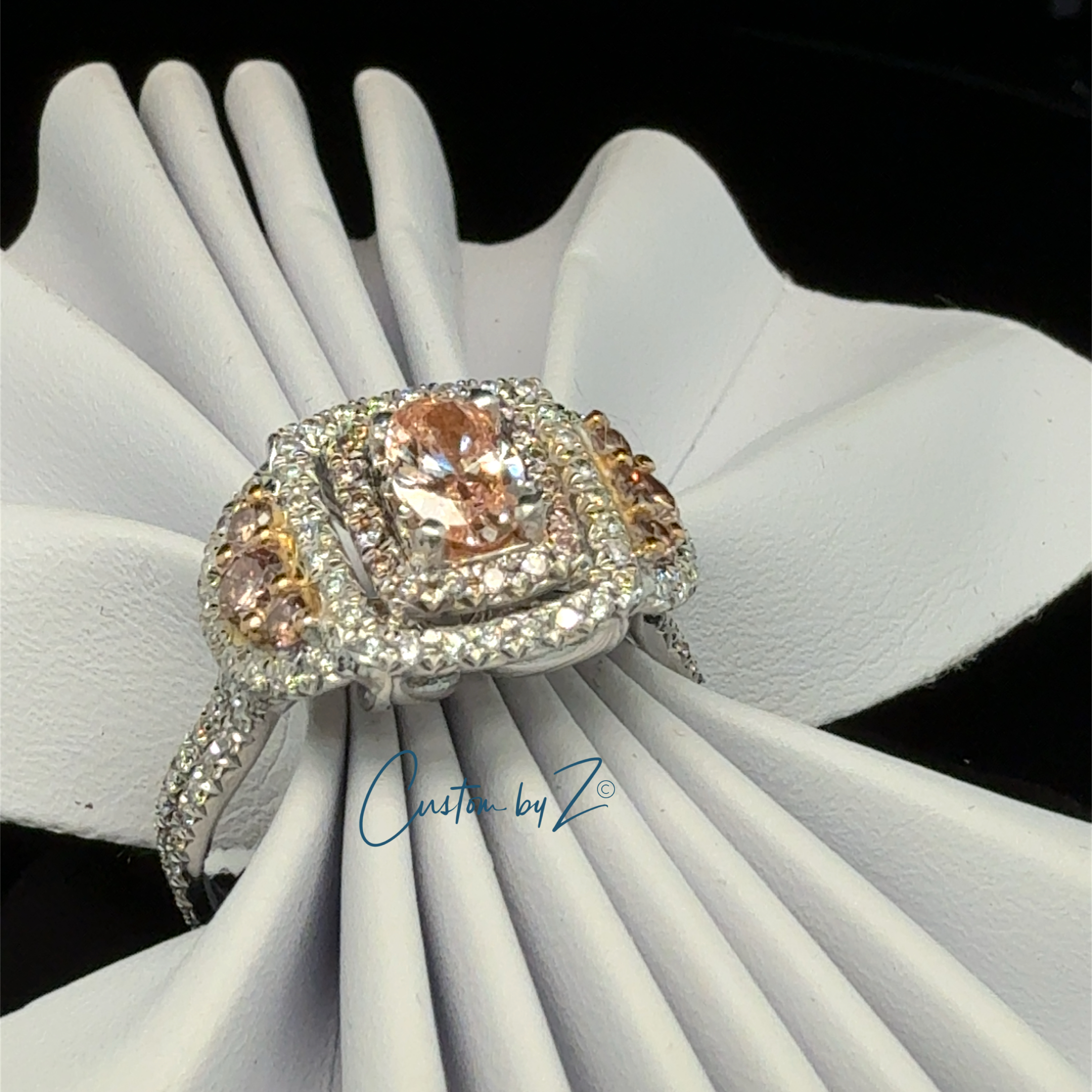
A hidden halo places small diamonds beneath the center stone, adding sparkle that is most visible from the side. A traditional halo surrounds the oval when viewed from the top and changes its apparent outline. Solitaires keep the design simple, while three-stone rings and diamond bands add more visual presence.
Setting height matters for comfort and wedding-band fit. A higher profile may allow a straight band to sit closer, while a low basket may require a curved or custom-contoured band.
Plan the matching wedding band
If you want the engagement ring and wedding band to sit flush, plan both pieces together. The basket, halo, prong placement, and width of the engagement-ring band determine how the second ring will fit. A matching band can repeat the same diamonds and metal, or it can introduce contrast while maintaining balanced proportions.
Read our guide to matching an engagement ring and wedding band.
Why a grading report matters
A grading report documents the diamond’s measurements, carat weight, color, clarity, fluorescence, and other characteristics. For fancy shapes such as ovals, the report supplies useful facts but does not replace a visual comparison. Review our guide to diamond certification and grading reports.
Frequently asked questions
Can I customize the metal?
Yes. An oval engagement ring can be designed in yellow, white, or rose gold, or in platinum. The best choice depends on color preference, maintenance expectations, budget, and the details of the design.
How long does a custom engagement ring take?
Timing varies with the design, stone selection, approvals, materials, and production schedule. Discuss any proposal date or deadline at the beginning of the consultation so the process can be planned realistically.
What carat weight is best for an oval?
There is no single best size. Compare millimeter measurements, finger coverage, setting proportions, lifestyle, and budget. The most suitable stone is one that looks balanced in the chosen design and fits your priorities.
Can an oval ring have a matching band?
Yes. A straight, curved, notched, or custom-contoured band may work depending on the engagement ring’s profile. Planning both pieces together creates the most control over the fit.
Create an oval diamond engagement ring in Dearborn
Custom by Z can build a setting around the actual measurements of your oval diamond, adjust the profile and prongs, add a hidden halo or other details, and coordinate a wedding band through the N.J. Diamonds custom design process.
Compare oval cuts with other options in our diamond shapes guide. Review our diamond buying guide and explore custom diamond engagement rings to plan your design.
If you already own a meaningful ring, see how upgrading the center stone can refresh its look while preserving its history.
4 thoughts on “Oval Diamonds: Bow Tie, Proportions, and Setting Tips”