Pip: Finding the perfect diamond engagement ring — the process that turns a comfortable budget and a four-variable gemological equation into a proposal story you'll tell for decades. No pressure.
Mara: njdiamonds walks through exactly that territory today — the 4Cs, ring styles, metal choices, custom design, and how to decide between shopping online and walking into a local jeweler. Let's start with what it actually takes to shop for a diamond engagement ring.
Shopping for a Diamond Engagement Ring
Mara: The central tension here is that engagement ring shopping feels enormous — emotionally and financially — but the post argues it doesn't have to be, if you know which variables actually matter and in what order to weigh them.
Pip: The post leads with cut as the place to anchor your judgment: "Even a diamond with high clarity and color can appear dull if the cut is poor."
Mara: That's the practical upshot — cut governs how light moves through the stone, so a smaller, well-cut diamond will outperform a larger, poorly cut one. Prioritize brilliance over size and you get more ring for the money.
Pip: The post walks through all four Cs in that spirit — not as a checklist to memorize but as a framework for comparison. On clarity, it's notably practical: inspect the actual stone at normal viewing distance rather than choosing by grade alone, and ask whether any inclusions affect durability.
Mara: Color gets the same treatment. The GIA D-to-Z scale applies to natural diamonds, but the post flags that lab-grown assessments may use different terminology, so reviewing the specific grading report matters more than assuming the scales match.
Pip: Carat, meanwhile, measures weight — not diameter, not visual size. A diamond's cut and shape can make a lower-carat stone look larger than a heavier one. The post's framing here is essentially: balance is the whole game.
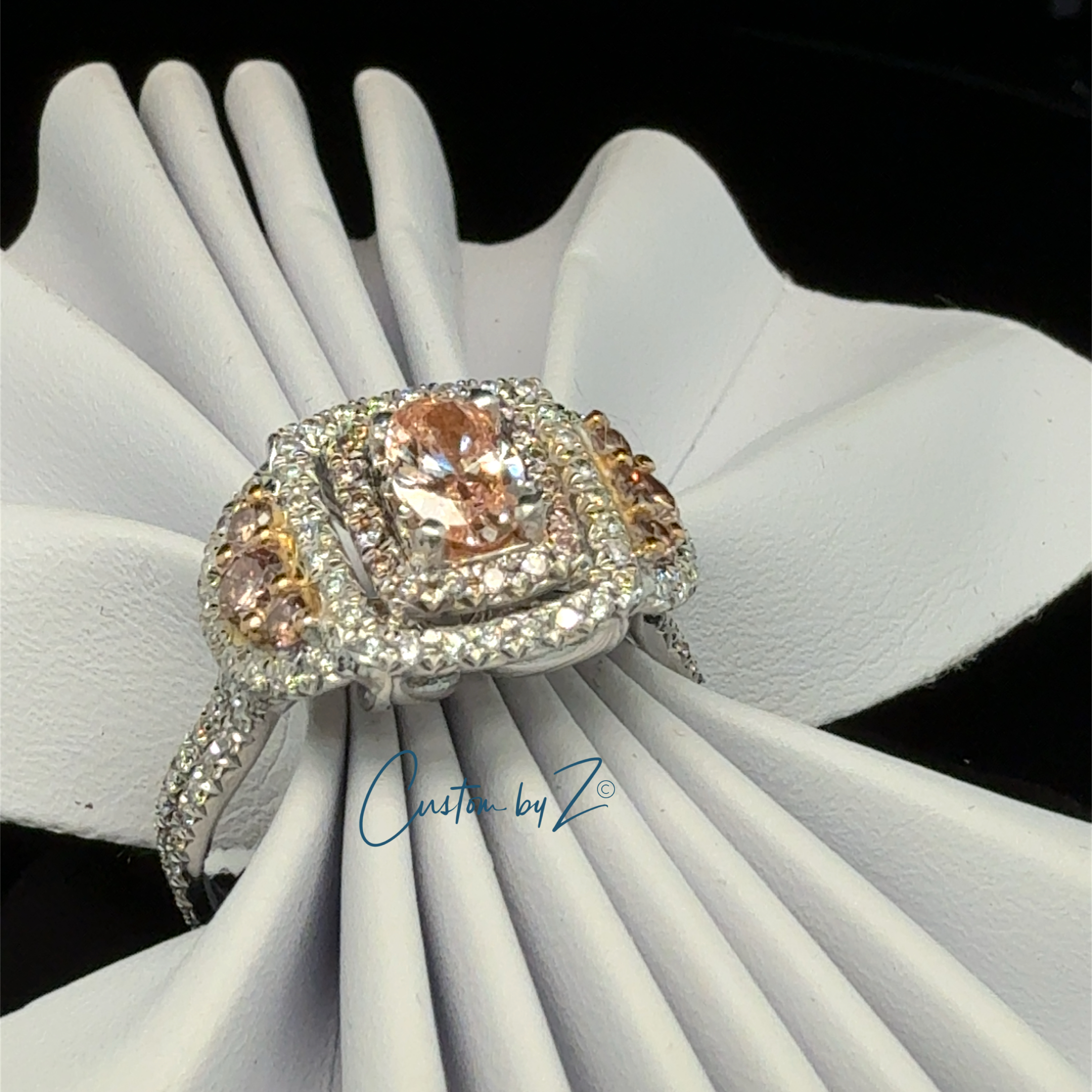
Mara: On styles, the post covers solitaires for clean simplicity, halo settings for added brilliance and the visual impression of a larger center stone, and vintage-inspired designs for more intricate detail. Metal choice layers on top — platinum for durability, white gold for a similar look at lower cost, rose gold for warmth.
Pip: And then there's the custom route. N.J. Diamonds' in-house designer has been at this since 1996 — which, for context, is before most people proposing right now were old enough to have opinions about jewelry.
Mara: The post also addresses ethical sourcing directly — it notes that a standard grading report describes quality but does not by itself establish responsible sourcing. If conflict-free or lab-grown matters to you, ask for sourcing evidence specific to the producer.
Pip: Which brings us to where you buy — and that question of in-store versus online leads naturally into how you actually evaluate what you're getting before committing.
Mara: The through-line is really about informed confidence — knowing the 4Cs, understanding what a grading report does and doesn't tell you, and finding a setting that fits the person wearing it.
Pip: Next time, maybe we'll get into what happens after the yes — but that's a whole other episode.