
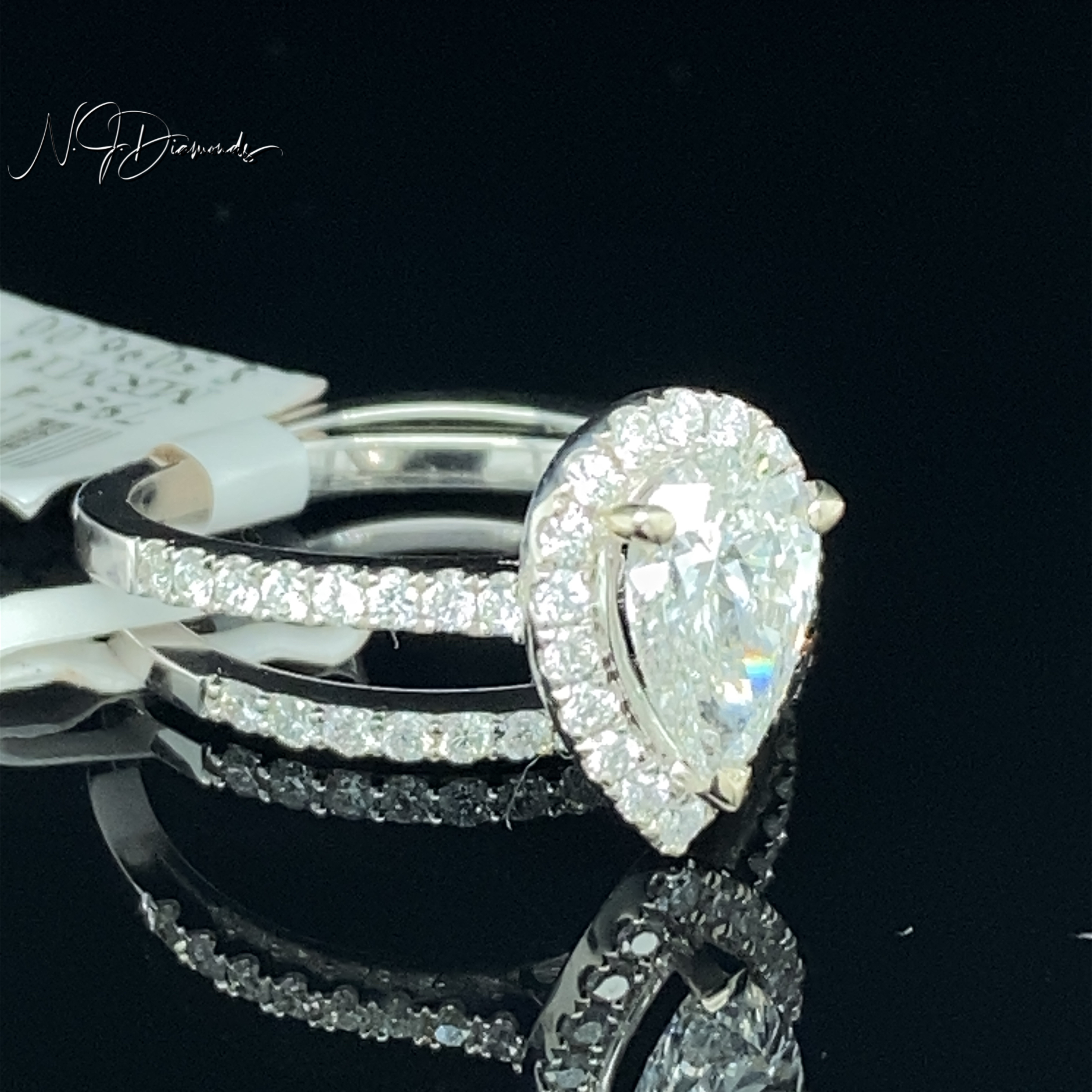
Pear-shaped diamonds combine a rounded end with a tapered point, creating a distinctive teardrop outline. The shape can look graceful and elongated on the finger, but its asymmetry and pointed tip require careful evaluation and a protective setting.
This archived N.J. Diamonds design features a 1.01-carat laboratory-grown pear-shaped center diamond in 14K white gold, surrounded by a halo of round diamonds and paired with a matching diamond band. It offers a useful example of the choices involved in designing a pear-shaped engagement ring set.
Look for a balanced pear outline
A pear diamond should have a pleasing transition from its rounded shoulders to its point. Some pears are long and slender; others are shorter and fuller. Neither outline is automatically better, but the two sides should appear balanced and the point should align with the center of the rounded end.
Length-to-width ratio helps describe the outline, but it does not capture every visual detail. Compare the complete silhouette, shoulder shape, symmetry, and face-up measurements instead of choosing by a ratio alone.


Check the bow-tie and light pattern
Like ovals and marquises, pear-shaped diamonds may show a darker bow-tie-shaped area across the center. Some contrast can give the pattern definition, but a strong dark band may distract from the stone’s brilliance.
Move the diamond under different lighting and view it from several angles. Look for brightness that is distributed through the rounded end, center, and tapered section. A laboratory report does not fully describe bow-tie visibility, so side-by-side visual comparison is important.
Protect the pointed tip
The point is the most vulnerable part of a pear-shaped diamond. It should be protected by a V-prong, bezel, or another setting feature designed for pointed stones. An exposed or poorly supported tip may be more vulnerable to impact.
Other prongs should hold the diamond securely and keep it centered. The setting must be built around the stone’s actual measurements rather than only its listed carat weight.
Decide which direction the point should face
A pear diamond can be worn with the point facing toward the fingertip or toward the hand. Point-up often emphasizes length, while point-down creates a different flow toward the wrist. There is no required direction—try both and choose the orientation that feels natural.
How a halo changes the design
A halo follows the pear outline with a frame of smaller stones. It can increase the ring’s overall presence and emphasize the teardrop shape. The spacing should be even, the point should remain clearly defined, and the halo should not make one side appear heavier than the other.
A hidden halo sits below the center stone and adds side-view sparkle without surrounding the diamond from the top. Solitaires, three-stone designs, and split shanks are other options for creating a pear-shaped ring with a different character.
Color and clarity considerations
Pear shapes may show color differently near the rounded end and tip. View the diamond against the metal color you plan to use. White metals create a cool frame, while yellow or rose gold can add warmth.
For clarity, pay particular attention to inclusions near the point, narrow end, or surface. Consider whether an inclusion is visible without magnification and whether its position may affect durability. Our 4Cs guide explains the main quality factors.
Natural or laboratory-grown pear diamonds
Both natural and laboratory-grown diamonds are available in pear shapes. They share the same basic diamond material but differ in origin and market considerations. Ask for clear disclosure and review the grading report for the individual stone. Learn more about diamond certification and grading reports.
Plan the matching wedding band
A halo, low basket, or wide center setting may affect whether a straight wedding band can sit flush. Planning the set together allows the engagement ring’s profile and the band’s curve to be coordinated. The diamond pattern can also be aligned so the two pieces feel intentional as a set.
Review our guide to matching an engagement ring and wedding band.
Create a pear-shaped engagement ring in Dearborn
Custom by Z can design the setting around your pear diamond, protect the point, refine the halo or prong layout, and coordinate a matching band through the N.J. Diamonds custom design process.

4 thoughts on “Pear-Shaped Diamonds: Bow Tie, Point Protection, and Halo Tips”