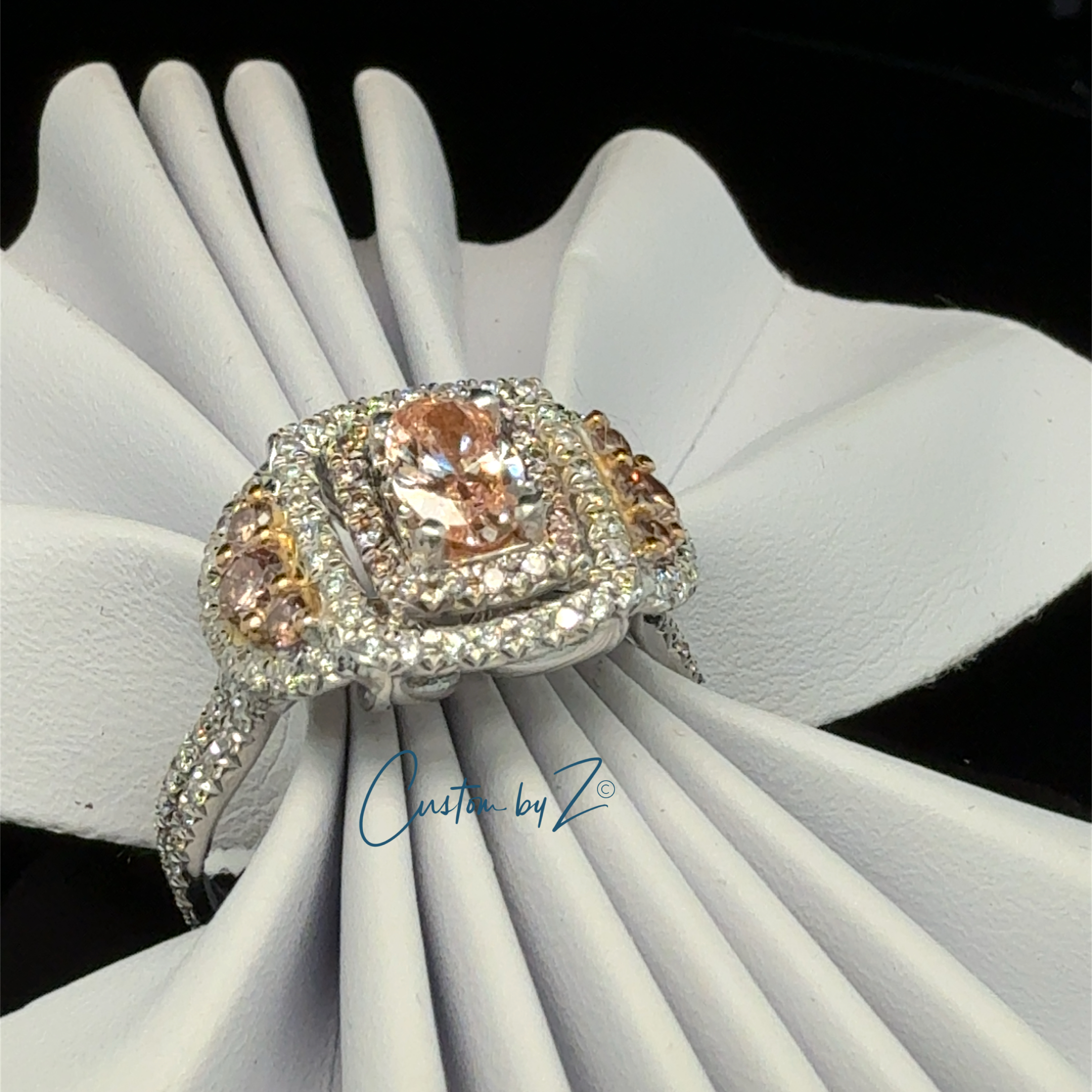
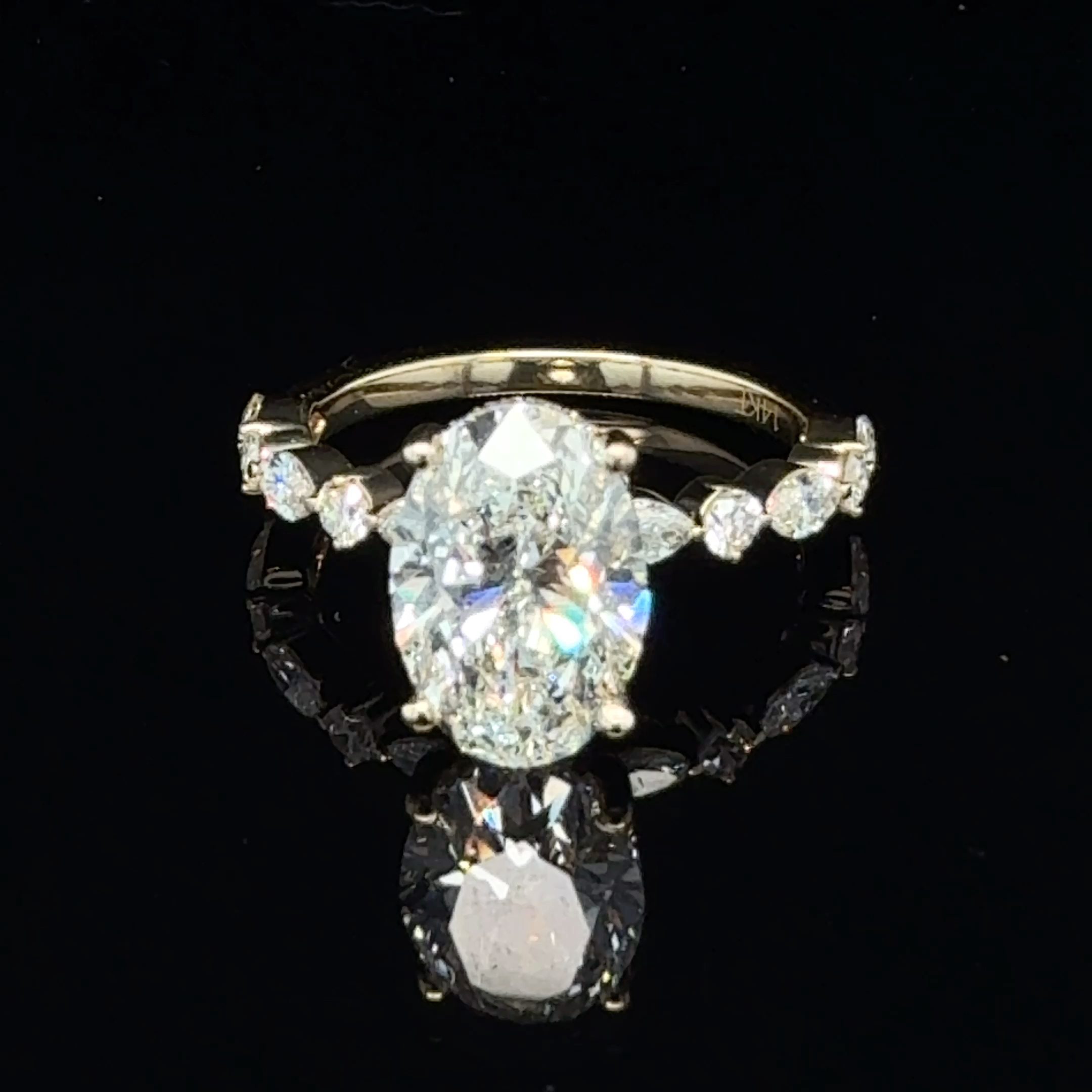
A two-piece engagement ring set pairs an engagement ring with a wedding band designed to look and fit well together. Planning both rings at the same time can create a balanced silhouette, reduce unwanted gaps, and make it easier to coordinate metal, diamonds, and decorative details.
The two rings do not need to be identical. A successful set can be perfectly matched, intentionally contrasted, or designed so each piece looks complete when worn alone.
Why the fit between the rings matters
The height and shape of an engagement-ring setting determine how closely a straight wedding band can sit beside it. A raised center setting may leave enough space for a straight band to sit flush. A low basket, wide halo, large center stone, or decorative side profile may require a curved, contoured, or notched band.
A small gap is not automatically a problem—some people prefer the visual separation. The important point is to understand the fit before choosing the band. Trying the rings together helps you evaluate comfort, movement, proportion, and the way the set looks from every angle.
Common wedding-band shapes
- Straight band: A classic choice that can sit flush with many raised engagement-ring settings.
- Curved or contoured band: Follows the outline of the center setting to reduce the space between the rings.
- Notched band: Includes a more defined opening that accommodates part of the engagement ring.
- Open band: Uses a deliberate space between its ends to frame a center setting.
- Ring guard or enhancer: Frames the engagement ring with bands or decorative elements on both sides.
Matching versus complementary styles
A matching band repeats the engagement ring’s metal, stone shape, setting style, and design details. This creates a unified look and can make the two rings appear like one complete piece.
A complementary band introduces contrast while maintaining visual balance. You might pair a polished solitaire with a diamond band, combine white and yellow gold, mix round and baguette diamonds, or choose a textured band beside a smooth engagement ring. The widths do not have to match exactly, but they should feel intentional together.
Consider comfort and everyday wear
Two rings can feel wider and fit more snugly than either ring worn alone. Try the complete set before finalizing size, especially if both bands are wide. Our ring sizing guide explains why band width, finger shape, and seasonal changes matter.
Also check whether exposed diamond settings or sharp details rub against the engagement ring. Repeated contact can wear metal over time. A carefully planned set keeps stones secure, protects delicate areas, and remains comfortable for daily use.
Can you add a second wedding band?
Yes. Some people wear one band on each side of the engagement ring for a symmetrical look. Others add an anniversary band later or build an intentionally mixed stack over time. Before adding more rings, consider the total width, finger coverage, metal contact, and whether each band can be worn independently.
Explore our guide to diamond wedding-band styles for more ideas.
When custom design is helpful
Custom design is useful when a standard band does not follow the engagement ring properly, when you want details to line up across both rings, or when you want to incorporate a family stone or meaningful motif. Designing the engagement ring and wedding band together allows the profile, proportions, and contact points to be considered from the beginning.
If you already own the engagement ring, bring it to the consultation. Custom by Z can evaluate its shape and create a band intended to coordinate with the existing piece through the N.J. Diamonds custom design process.
Find the right engagement ring and band combination
N.J. Diamonds has served Dearborn and Metro Detroit since 1996. Explore our custom diamond engagement rings, compare ready-made bands, plan a matched set, or create a custom combination that fits your ring and personal style.