
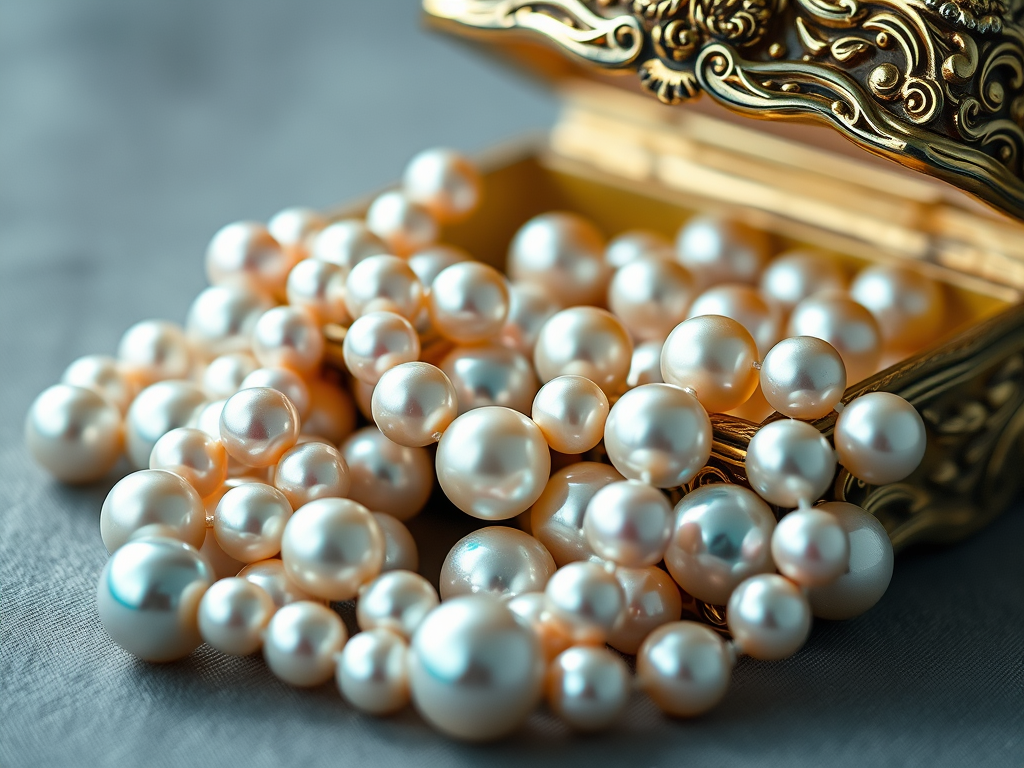
Pearls have a long history in jewelry, prized for their luster and association with beauty, status, and celebration. They form in living mollusks, giving them a different origin from gemstones mined from rock.
From rare natural pearls to cultured pearls
Natural pearls form without human intervention. Cultured pearls form with human involvement in the process. The commercialization of Japanese akoya cultured pearls in the early twentieth century changed the pearl market and made pearl jewelry accessible to more buyers. GIA explains this development in its history of cultured pearls.
Pearls in jewelry today
Akoya, freshwater, Tahitian, and South Sea cultured pearls offer different colors, shapes, and sizes for strands, earrings, rings, and custom pieces. Compare the pearl type and quality rather than price by weight alone. Our pearl guide is a starting point for exploring your choices.
Caring for Cultured Pearls
- Keep pearls away from perfume and hairspray.
- Put on your pearls after you finish your makeup.
- Wipe your pearls with a soft, clean cloth after wearing them.
- Store pearls separately from other jewelry to prevent scratching.
- Have your pearls restrung if they feel loose or if the silk cord looks discolored.
Read our pearl care guide, or contact N.J. Diamonds in Dearborn to discuss pearl jewelry, restringing, or a custom design.
3 thoughts on “The History of Pearls: Timeless Gems”