
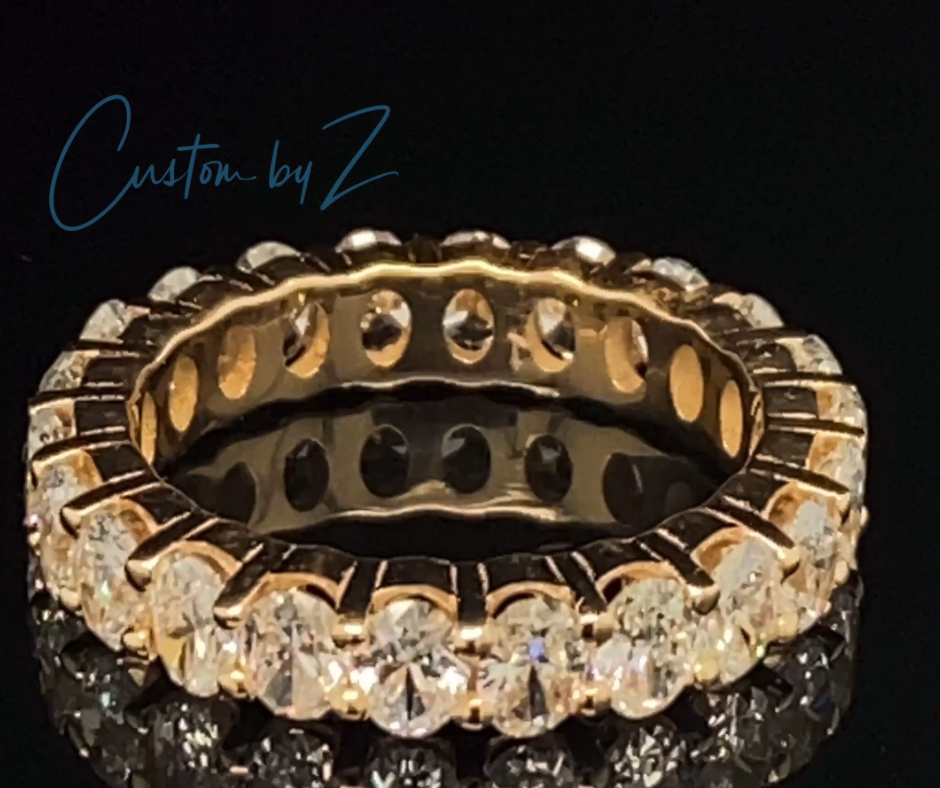
An oval diamond eternity band delivers continuous sparkle with an elegant, elongated look. Before choosing one, pay close attention to fit, setting style, stone exposure, and future sizing needs—especially if the band will sit beside an engagement ring.
An archived Custom by Z design
This Custom by Z wedding band was created with 2.40 total carats of oval diamonds graded VS clarity and F color, set in 14K yellow gold. It is shown as a design example; stone availability, grading, dimensions, and pricing vary for every custom project.
Full, three-quarter, or partial eternity?
A full eternity band places diamonds around the entire ring for an uninterrupted look. A three-quarter or partial eternity design leaves a small plain-metal section underneath. That section can improve comfort, reduce contact between diamonds and nearby fingers, and make future sizing adjustments more practical.
Full eternity bands usually have limited resizing options because changing the circumference can disrupt the repeating stone pattern and setting. Finalize the ring size before production, and review our complete ring sizing guide before ordering.
Oval orientation and setting choices
Oval diamonds may be set north-south for a classic elongated rhythm or east-west for a broader, more contemporary appearance. Shared-prong and U-prong settings expose more of each diamond and maximize light, while bezel or partial-bezel styles add protection and a smoother edge. The best choice depends on the desired profile, daily-wear habits, and how closely the band must sit beside another ring.
Because neighboring ovals should look consistent, matching length-to-width ratio, outline, color, and brilliance matters as much as matching carat weight. Our oval diamond guide explains the shape in more detail.


Fit and engagement-ring pairing
A wide or diamond-set band can feel more snug than a narrow ring in the same nominal size. Try on a band with similar width and depth, ideally together with the engagement ring. Check whether exposed diamond girdles or prongs rub the engagement-ring setting, and whether a spacer band or custom contour would prevent contact.
Explore additional styles in our diamond wedding band guide. If an existing engagement ring needs a close match, a custom-designed band can account for its height, width, contour, and metal color.
Natural or lab-grown diamonds
Either natural or lab-grown diamonds can be used in an eternity band. Both are real diamonds with the same fundamental material properties, but their origins and market considerations differ. The stone origin should be disclosed clearly, and the matched set should be documented on the sales paperwork.
Care for daily wear
- Remove the ring for heavy lifting, impact-prone work, and exposure to harsh chemicals.
- Clean gently with mild soap, warm water, and a soft brush; avoid forcing debris from under delicate prongs.
- Have the setting inspected periodically for worn, lifted, or damaged prongs.
- Stop wearing the band if a diamond moves or catches, and schedule jewelry repair promptly.
Plan your eternity band
Bring the engagement ring—or accurate measurements and photos—to your consultation so we can evaluate fit and design a compatible band. Contact N.J. Diamonds to discuss stone shape, setting style, metal, sizing, and budget.
Compare stone outlines in our diamond shapes guide, review our diamond buying guide, and explore custom diamond engagement rings when planning a coordinated ring and band.

6 thoughts on “Oval Diamond Eternity Bands: Fit, Sizing, and Everyday Wear”