
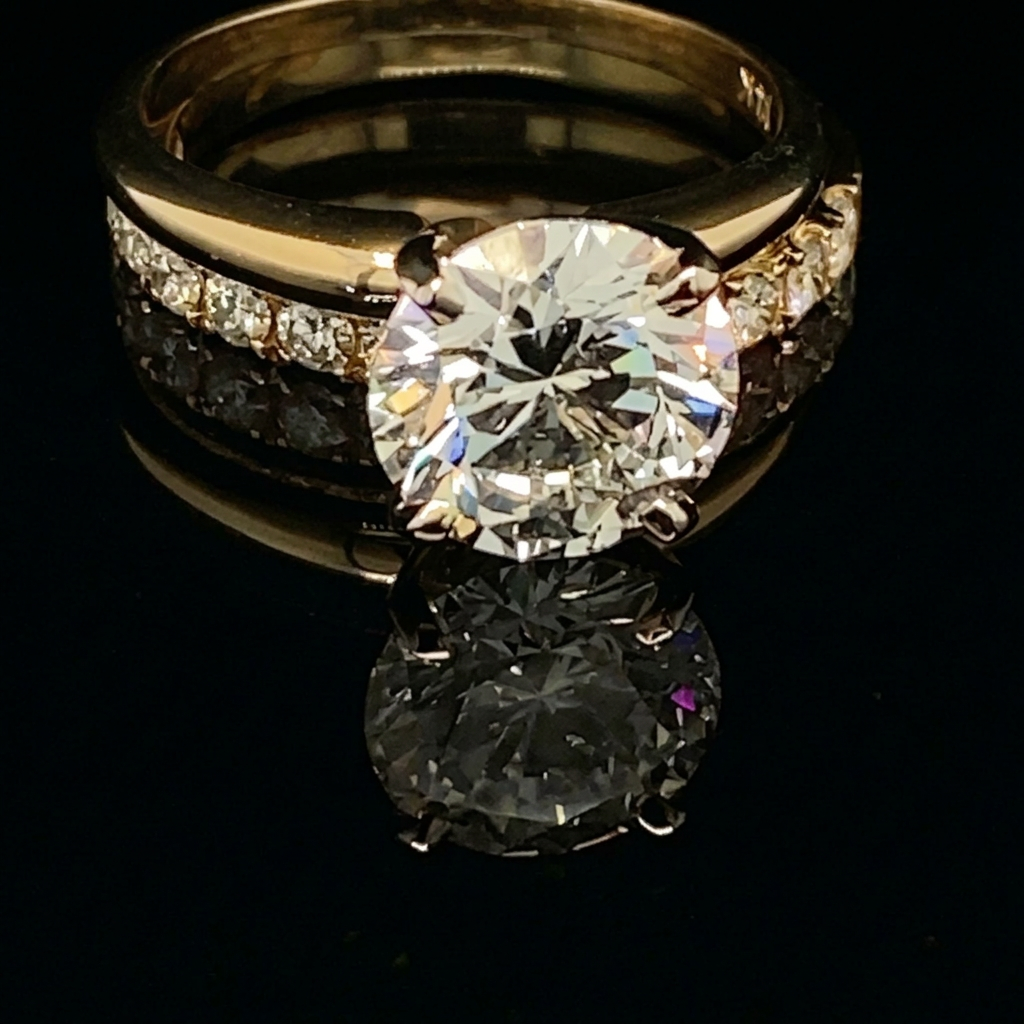
A productive custom engagement-ring consultation turns inspiration into clear design decisions. You do not need a finished sketch before you begin. A budget range, a few style references, and an understanding of how the ring will be worn are enough to start.

What to bring to your consultation
- A realistic budget range: This guides the diamond, metal, setting, and accent-stone choices.
- Inspiration photos: Save examples of details you like—and designs you do not like.
- Daily-wear information: Consider work, hobbies, gloves, exercise, and how often the ring may face impact.
- Ring-size information: Bring a ring that fits the correct finger if the recipient will not attend.
- Heirloom stones or jewelry: Bring the actual items so their condition and measurements can be evaluated.
- Wedding-band preferences: Decide whether the future band should sit flush, curve around the setting, or create a deliberate gap.
Set priorities before choosing details
Every design involves tradeoffs. A larger-looking center stone, a low profile, an intricate halo, maximum durability, and a perfectly flush wedding band may not all fit together in one design. Rank the features that matter most so the designer can explain practical options.
For the center diamond, compare cut, color, clarity, carat weight, measurements, and appearance. Natural and lab-grown diamonds are both available, but their origins and market considerations differ and should be disclosed clearly. Review our diamond 4Cs guide before the appointment.
Choose the setting around real-life wear
Setting height affects visibility, protection, and wedding-band fit. Prong count and placement affect the outline and security of the center stone. The shank must balance the visual weight of the center setting while remaining comfortable and durable enough for daily use.
- Solitaire: keeps attention on the center stone and can be simple to pair.
- Halo or hidden halo: adds diamonds around or beneath the center, but requires thoughtful cleaning and maintenance.
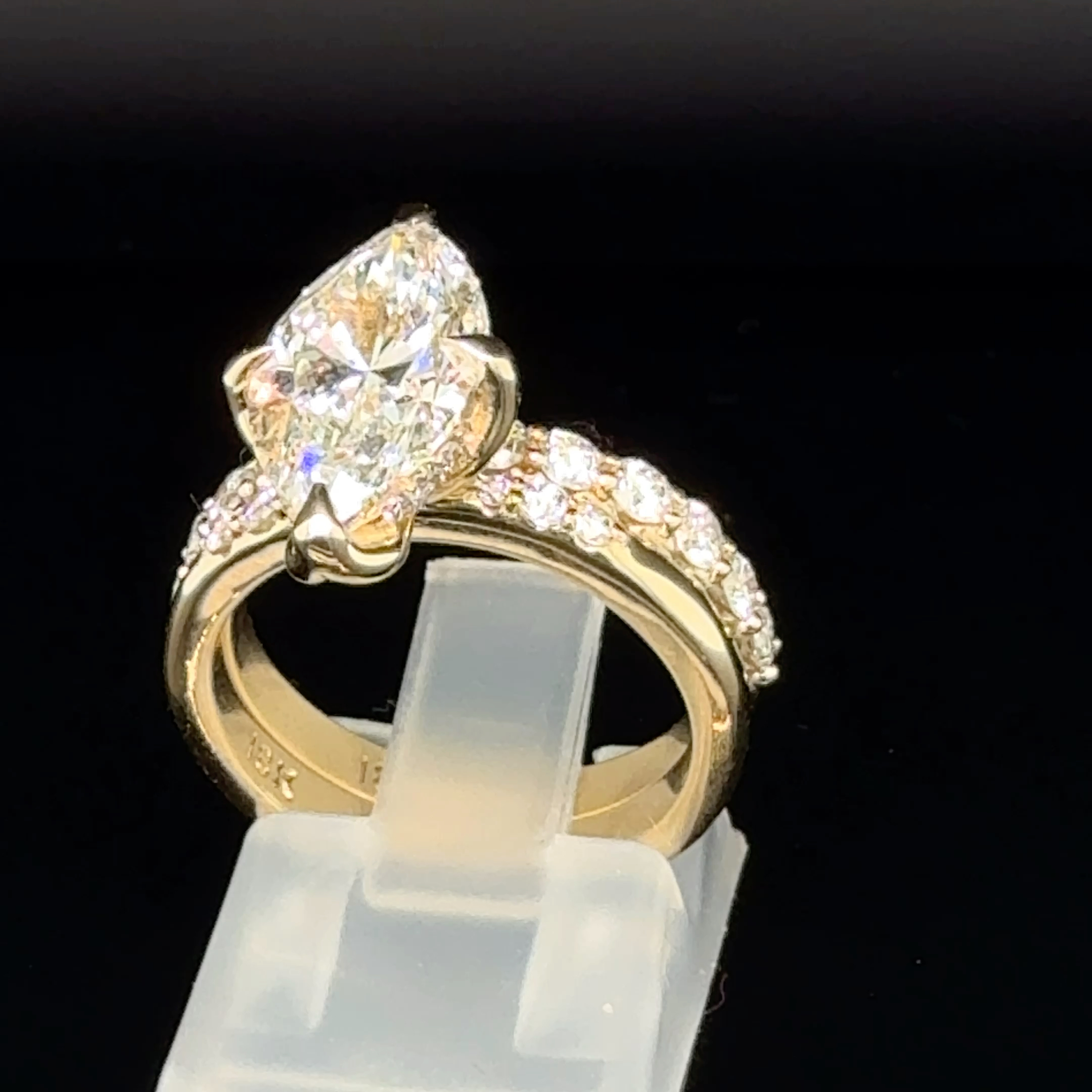
- Three-stone: adds side stones and finger coverage while increasing the number of settings to inspect.
- Diamond-accent shank: extends sparkle along the band; consider how exposed stones will contact a wedding ring.
- Bezel or partial bezel: surrounds more of the diamond edge and can suit an active lifestyle.
Plan the wedding band early
Even if the wedding band will be purchased later, discuss it during the engagement-ring design. The basket, prongs, decorative gallery, and shank can determine whether a straight band sits close to the ring. Our diamond wedding-band guide covers settings, fit, metals, and eternity styles.
From consultation to CAD approval
After the design direction, dimensions, materials, and budget are established, CAD renderings provide a detailed preview. Review the ring from several angles and ask about proportions, setting height, stone security, comfort, and the matching band. Manufacturing begins after the design is approved.
Many Custom by Z rings can be completed in about 10 to 14 days after approval, although timing varies with complexity and material availability. Learn more about the full custom jewelry design process.
Questions to ask before approval
- What metal and diamond origin are documented on the order?
- What are the center stone’s measurements and grading details?
- Will a straight wedding band sit flush?
- Which areas need periodic professional inspection?
- Can the ring be resized later, and what are the limits?
- What is included in the final price and expected completion time?
Meet Custom by Z in Dearborn
N.J. Diamonds has created custom jewelry in Dearborn since 1996. Our in-house designer works with you from the first idea through final approval. Contact N.J. Diamonds to schedule a consultation and bring your ideas to life.


One thought on “Custom Engagement Ring Consultation: What to Bring and Decide”