
A diamond grading report and a custom engagement-ring design answer different questions. The report documents characteristics of the loose diamond, while the design determines how that diamond will be presented, protected, and worn. Using both together helps create a ring based on verified stone information and thoughtful proportions.
“GIA certified” or GIA graded?
People often say “GIA-certified diamond,” but GIA issues independent grading reports rather than certifying or guaranteeing a diamond. A GIA report records the laboratory’s findings for the submitted stone at the time it is examined.
What a GIA diamond grading report includes
- The diamond’s shape and cutting style
- Measurements and carat weight
- Color and clarity grades
- Cut grade for eligible round brilliant diamonds
- Polish, symmetry, and fluorescence observations
- A clarity-characteristics plot or other identifying information, depending on the report type
- A report number that may also be laser-inscribed on the diamond’s girdle
Learn more about what these documents do—and do not—tell you in our diamond certification guide.
How the report helps with custom design
A custom setting must be built around the diamond’s actual dimensions, not carat weight alone. Two diamonds with the same weight can have different diameters, depths, outlines, and girdle profiles. The report gives the designer a useful starting point, while physical inspection confirms how the stone should be supported.
The diamond’s shape also affects prong placement, basket design, halo outline, and wedding-band fit. Points and corners may need extra protection, while a deep or shallow stone can change the height of the finished ring.


The report does not choose the best-looking diamond for you
A grading report is valuable documentation, but it cannot fully describe beauty. Diamonds with similar grades can differ in proportions, transparency, inclusion placement, light performance, and overall character. Compare the document with the actual stone rather than buying from the report alone.
The report also does not assign a retail replacement value, guarantee future value, or evaluate the finished ring’s metal, craftsmanship, accent stones, or condition.
Use the 4Cs as a starting point
Cut, color, clarity, and carat weight work together. The best balance depends on the diamond shape, setting, metal color, personal preferences, and budget. Review our guide to the diamond 4Cs before comparing stones.
Match the diamond to the report
Before setting a diamond, the jeweler should confirm that its identifying characteristics and any laser inscription are consistent with the grading report. Keep the report in a safe place after the ring is completed. It may be useful for insurance documentation, future appraisal, service, or resale discussions.
Design around the stone, not just the grade
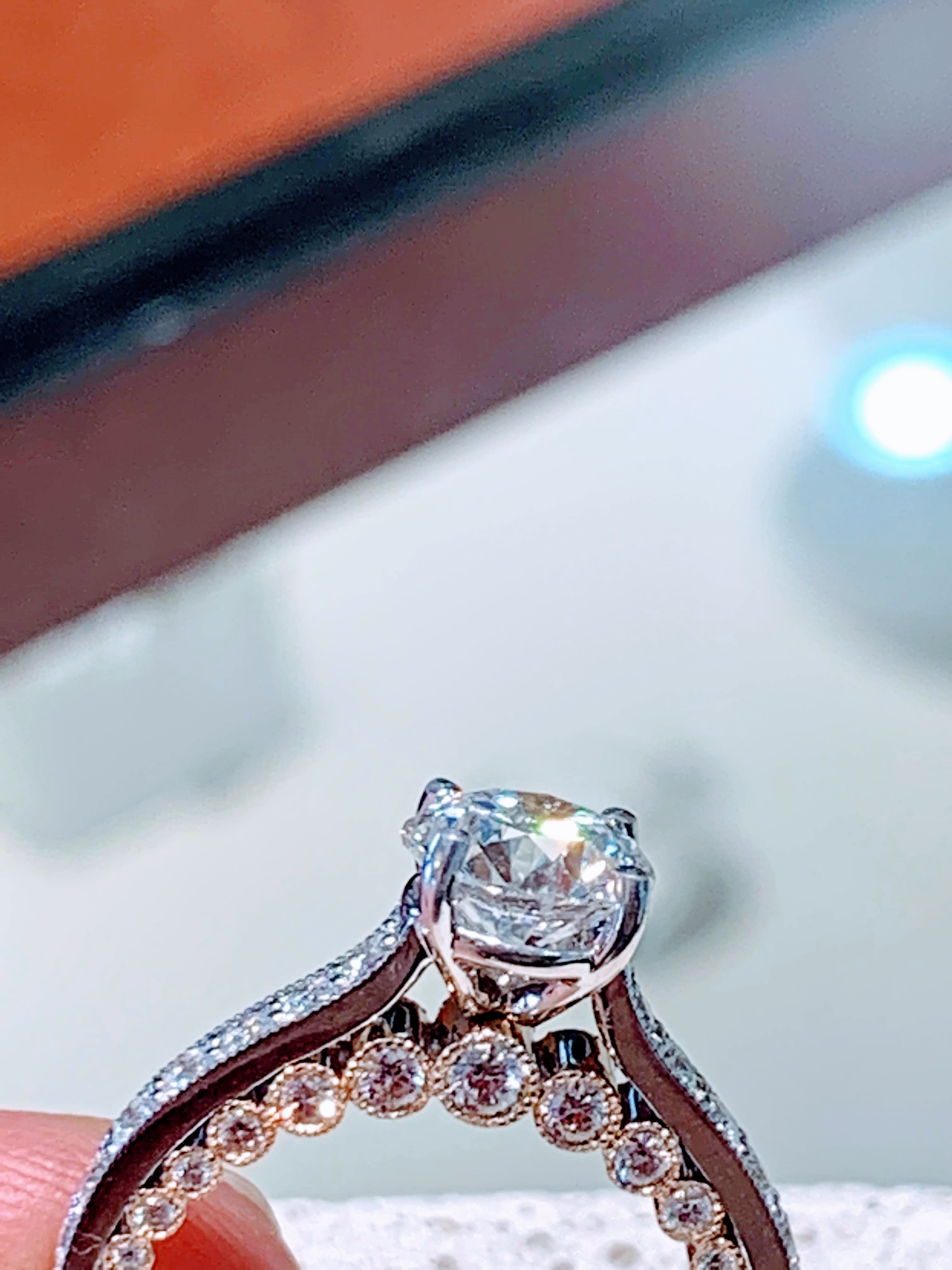
The archived ring shown here pairs a GIA-graded natural round diamond with rose- and white-gold details. The contrasting metals separate the accent area from the center setting, while the side view shows how design can add interest beneath the stone.
N.J. Diamonds has created one-of-a-kind jewelry in Dearborn since 1996 through our in-house designer, Custom by Z. Explore our Diamond Buying Guide, custom diamond engagement rings, and custom jewelry design process, or contact N.J. Diamonds to compare diamonds and discuss a setting.

One thought on “How a GIA Diamond Grading Report Supports Custom Ring Design”