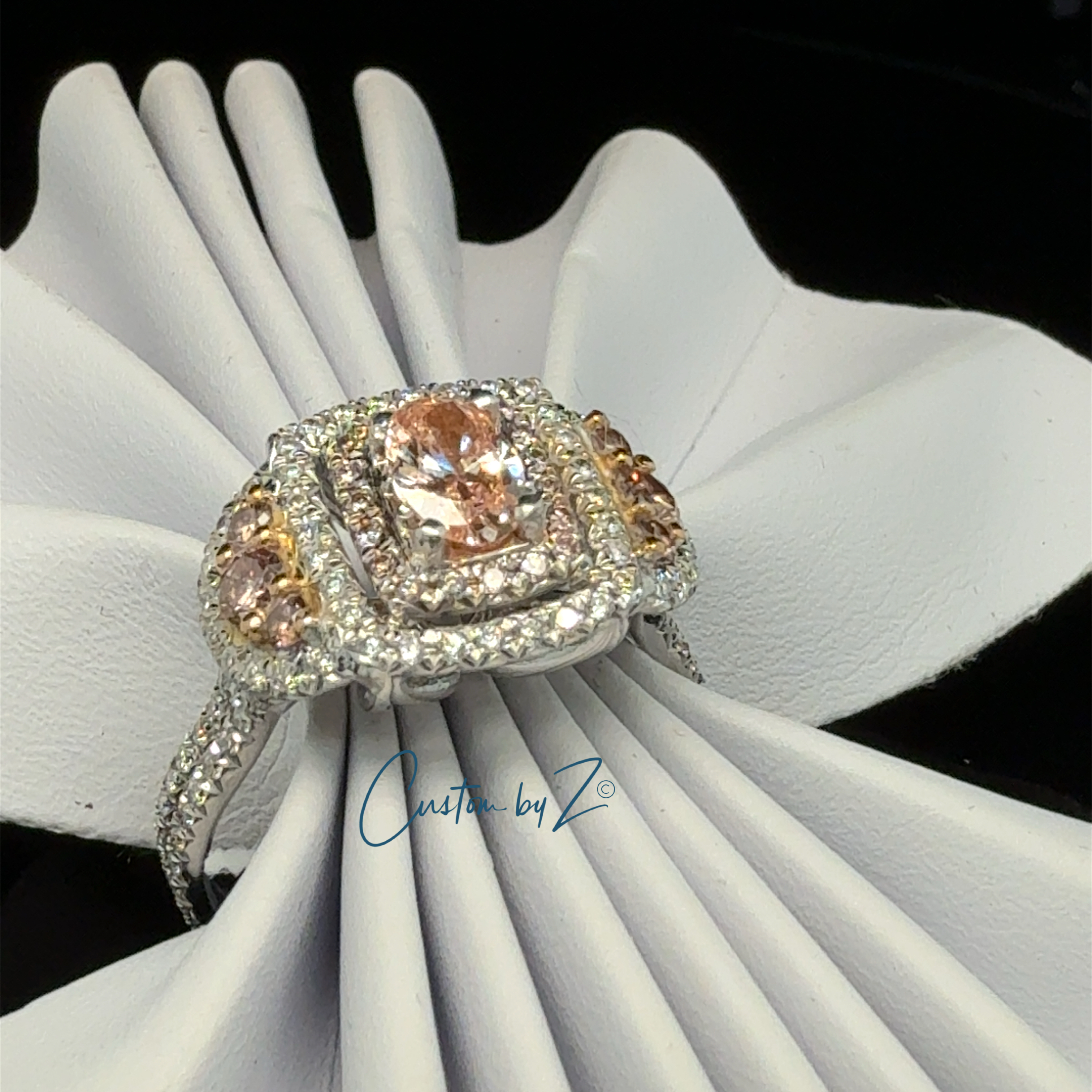
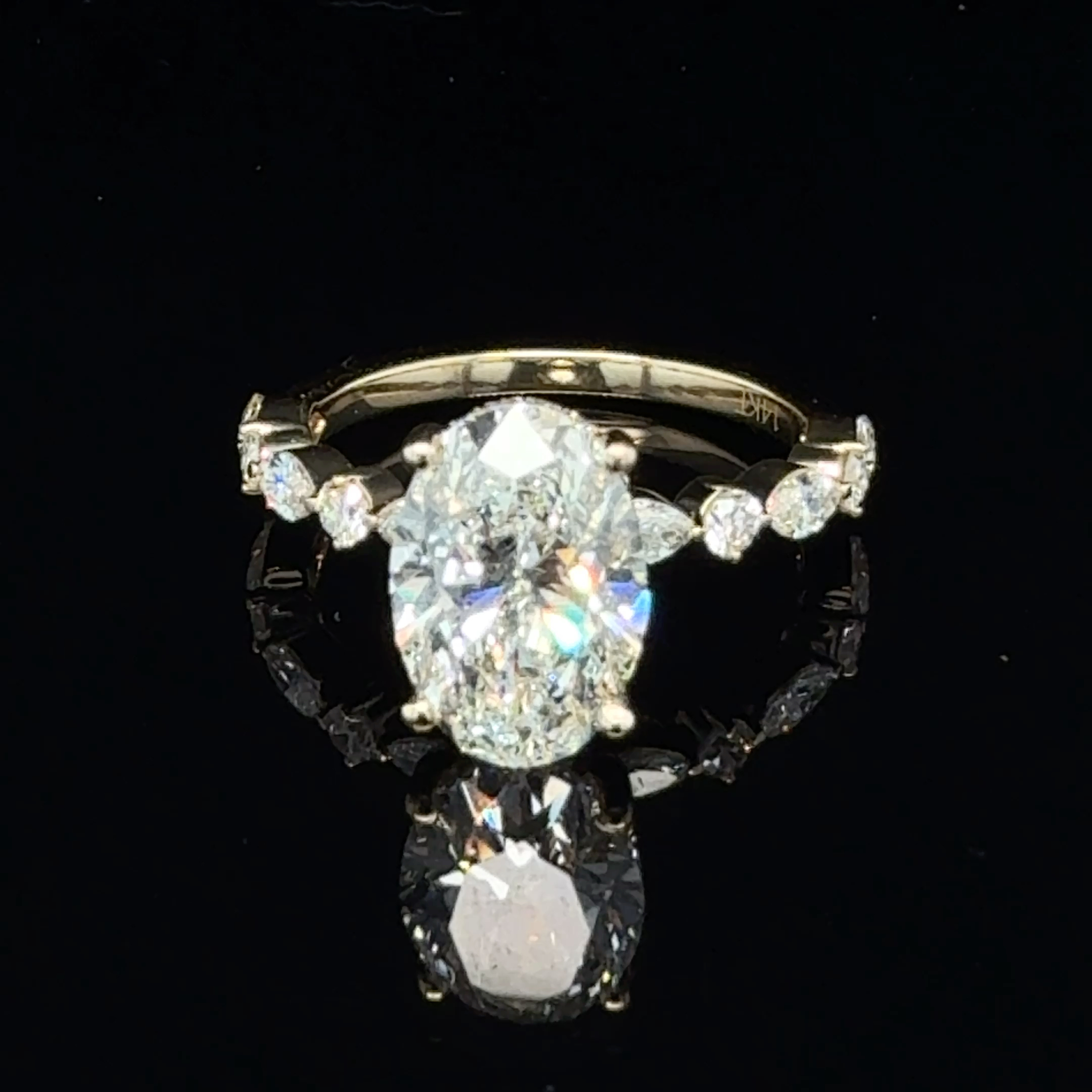
The shank is the part of a ring that circles the finger. It supports the setting, influences comfort and durability, and gives the design much of its visual character. Small changes in width, profile, shape, or stone placement can make two rings with similar center stones feel completely different.
Where is the shank on a ring?
The shank begins below the shoulders on each side of the setting and continues around the underside of the finger. The bottom portion receives much of the wear from gripping objects and contacting hard surfaces, so its thickness and condition are important.
Over time, a shank can become thin, out of round, cracked, or worn near previous sizing seams. A jeweler may recommend rebuilding or replacing the weakened section before it breaks.


Common ring-shank styles
- Straight shank: Maintains a consistent width and creates a clean, classic outline.
- Tapered shank: Narrows or widens as it approaches the center setting, changing the apparent scale of the stone.
- Split shank: Divides into two or more sections near the top, adding open space and visual width.
- Knife-edge shank: Rises to a subtle ridge along the center, creating a crisp profile that can make the band appear narrower.
- Cathedral shank: Sweeps upward toward the center setting, visually supporting and framing the stone.
- Bypass shank: Curves around the center rather than meeting it symmetrically, creating movement and an unconventional silhouette.
- Euro shank: Uses a slightly squared lower section that can help reduce spinning on some top-heavy rings.
Shank width affects appearance and fit
A narrow shank can make the center stone appear larger and may feel delicate, but it still needs enough metal for structural strength. A wider shank creates more visual presence and space for texture or stones, yet it often fits more snugly than a narrow band in the same measured size.
The transition from the shoulders to the bottom should also be comfortable and balanced. Very abrupt changes in width may feel different between the fingers or place stress on a thin area.
Adding diamonds or gemstones to the shank
Pavé, bead-set, channel-set, prong-set, and bezel-set stones each create a different look and surface. Stones can cover the top half, continue farther around the sides, or form an eternity design around the full ring.
More stones can add sparkle, but they also affect maintenance and future sizing. Settings that extend around the entire ring may limit how much the size can be changed. Very small stones and delicate shared prongs should be inspected periodically.
Metal, profile, and finish
Yellow gold, white gold, rose gold, and platinum differ in color, weight, wear, and service needs. A ring can use one metal throughout or combine colors to separate the center setting from the shank.
The cross-section matters too. A rounded comfort-fit interior can feel different from a flat interior. High polish emphasizes reflection, while brushed, satin, hammered, or engraved finishes add texture. Any finish will change gradually with wear and may need refinishing.
Plan for sizing and future repair
Before choosing an intricate shank, ask how it can be resized. Diamonds around the full circumference, repeating patterns, mixed metals, and unusual geometry may restrict the available adjustment. Our guide, Can Your Ring Be Resized?, explains what a jeweler evaluates first.
If a current ring feels thin, bent, cracked, or uncomfortable, have it inspected before more damage occurs. N.J. Diamonds performs jewelry repairs in store, including ring sizing and shank repair.
Design a shank around your ring and lifestyle
A custom shank can be built around the center stone, wedding band, finger proportions, and preferred level of maintenance. N.J. Diamonds has created one-of-a-kind jewelry in Dearborn since 1996 through our in-house designer, Custom by Z.
Explore our custom diamond engagement rings and custom jewelry design process, or contact N.J. Diamonds to discuss a new ring or an existing shank that needs attention.