Clarity Enhanced Diamonds: What Are They?
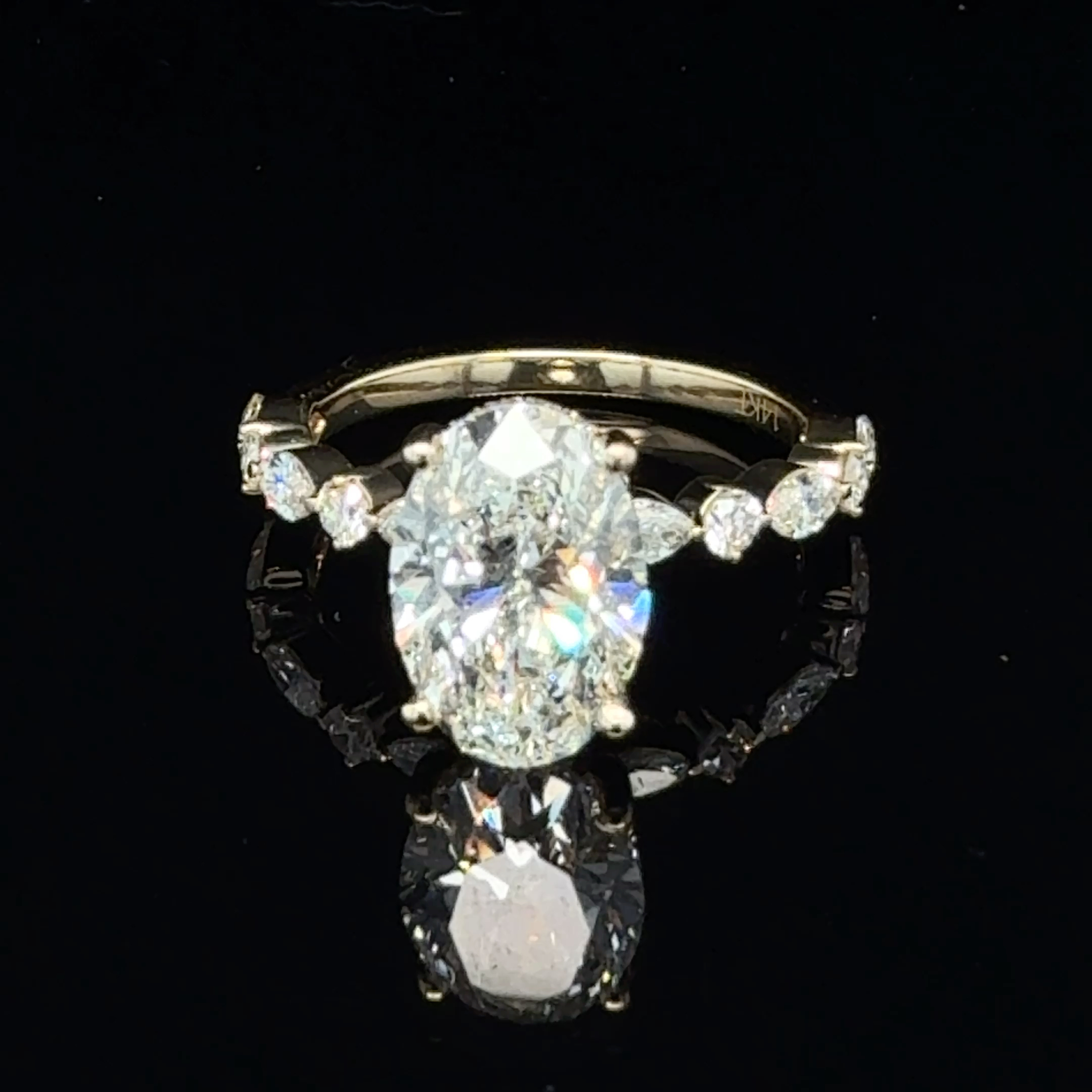
The customer came into the store looking for a 1.50-carat diamond. He asked for a price on a round diamond with SI clarity and E color. He gave no sign that he was looking at diamonds online or that he had been given a price online for a Diamond with these specifications. We gave him a price for several variations of what he was looking for: 1.47 carats, E color, SI1, and SI2. A price for a 1.50 carat with the same clarity, color, and so on.
After showing him several diamond engagement ring settings, he decided he would like a custom-made wedding ring. We started working with him on that. All told, we spent close to an hour with the customer, answered all questions, gave prices, he thanked us, and left the store. A week later, he came back to the store with a diamond he bought online, asking us if he had been ‘ripped off?’ Our GIA-certified diamond grader, with 20 years of experience, reviewed the diamond certificate and the diamond. The first thing he told the customer was that the diamond is clarity-enhanced.
Diamond enhancements are specific treatments, performed on natural diamonds (usually those already cut and polished into gems), which are designed to improve the visual gemological characteristics of the diamond in one or more ways. These include clarity treatments such as laser drilling to remove black carbon inclusions, fracture filling to make small internal cracks less visible, color irradiation and annealing treatments to make yellow and brown diamonds a vibrant fancy color such as vivid yellow, blue, or pink.
The CIBJO and government agencies such as the United StatesFederal Trade Commission explicitly require the disclosure of all diamond treatments at the time of sale. Some treatments, particularly those applied to clarity, remain highly controversial within the industry — this arises from the traditional notion that diamonds hold a unique or “sacred” place among the gemstones, and should not be treated too radically, if for no other reason than a fear of damagingconsumer confidence. Source: Wikipedia
The customer noticed the diamond he bought was labeled ‘Clarity-Enhanced’ but didn’t realize this meant a laser was used to remove inclusions. The leftover space is then filled with a substance. A lab certified the stone as SI1 clarity, noting it was laser-enhanced. He purchased a 1.50-carat stone with SI clarity and E color for thousands less than our quoted price, believing he got a great deal. Without enhancements, the diamond is actually of I clarity.
Pitfalls of Clarity-Enhanced Diamonds.
- Clarity enhancements are temporary and can wear off.
- Diamonds should not be exposed to heat, as it may melt the glass filling.
- Inform your jeweler that your diamond is clarity-enhanced before any work is done.
- Clarity-enhanced diamonds are weaker.
- Melting glass filling leaves empty holes in the diamond.
- Reputable grading labs, like the GIA, will not grade clarity-enhanced diamonds.

Yes… Clarity-enhanced diamonds are diamonds that are mined just like any other; however, they are altered to become something they were not in the first place.
If you are willing to take the risk of owning one of these diamonds, you might like to ask the seller,
- What was the clarity of the diamond before it had its enhancements done to it?
- Is the seller telling you all the risks of owning a clarity-enhanced diamond?
- Ask the seller how long the glass filling will last.
- Ask the seller whether they will send the diamond in for re-enhancement when the filling comes out.
- How much does it cost to have the diamond re-enhanced?