

This custom cushion-cut diamond engagement ring was designed with a matching wedding band. The couple worked with N.J. Diamonds to choose the center diamond, halo-style
Read MoreTag: diamond engagement ring

Two-Piece Platinum and Yellow-Gold Wedding Ring Set
This two-piece wedding ring set combines platinum with 18-karat yellow gold. The engagement ring and matching band were designed to work together as one coordinated
Read More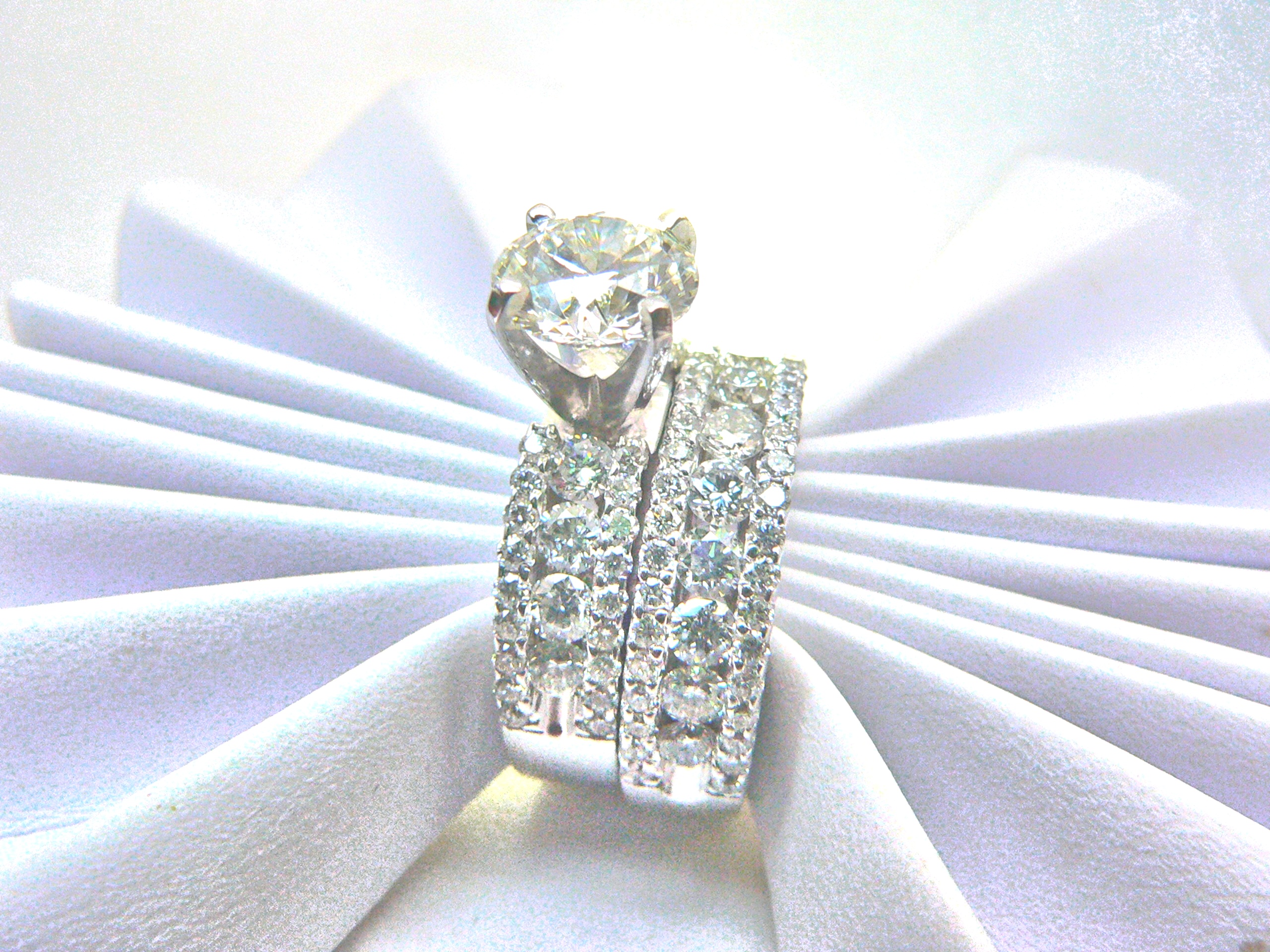
Design Your Own Engagement Ring in Dearborn
Designing your own engagement ring gives you control over the details that matter most: the center stone, metal, setting, accent stones, proportions, and budget. At
Read MoreCustom Order Diamond Engagement Ring
This custom diamond engagement ring was created as a coordinated two-piece design, pairing a round center diamond with a matching diamond band. The photographs below
Read More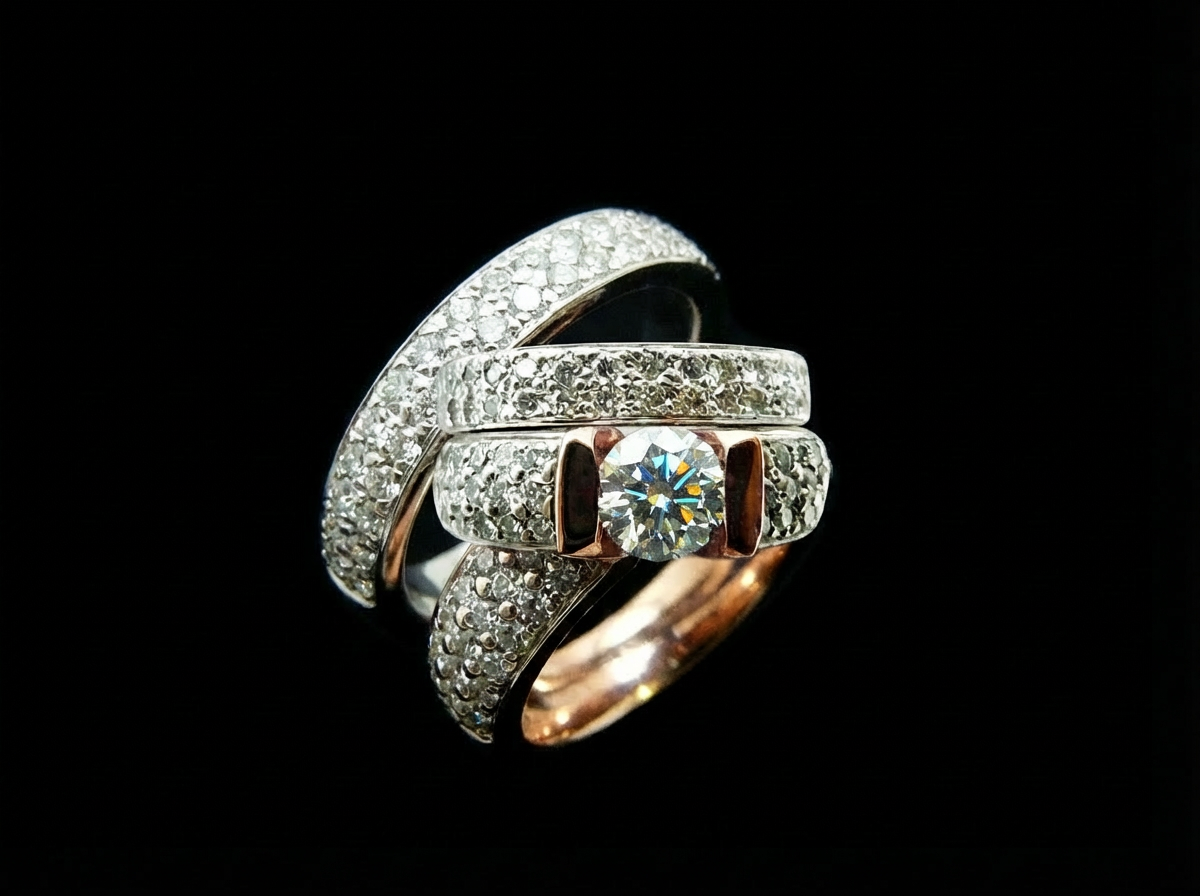
Custom Pink and White Gold Diamond Engagement Ring Set
Since 1996, N.J. Diamonds has helped clients create jewelry that reflects their individual style. Designed by Custom by Z, this pink-and-white gold diamond engagement ring
Read More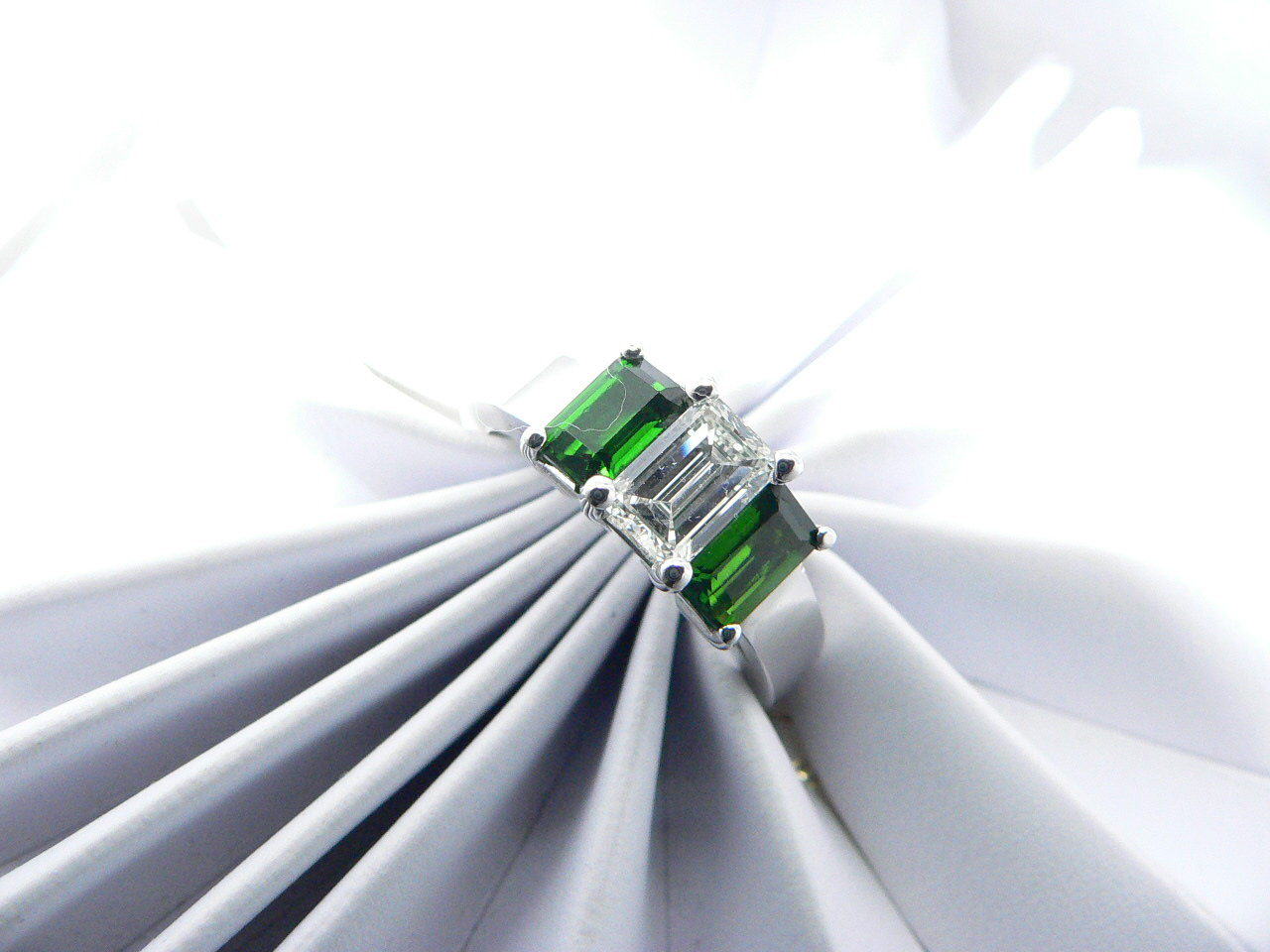
Emerald-Cut Diamond Engagement Ring with Emerald Accents
Emerald-Cut Diamond Engagement Ring with Emerald Accents This emerald-cut diamond engagement ring pairs a bright step-cut center diamond with two vivid green emerald gemstones. The
Read More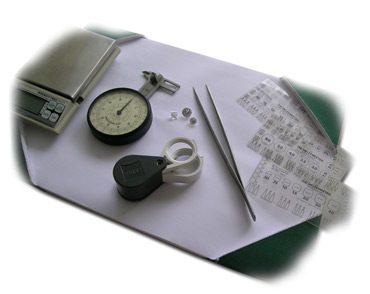
Jewelry Appraisal Detroit Metro Area
A GIA-trained diamond grader performs our jewelry appraisals in person using professional equipment. We do not rely on AI estimates. When you purchase a diamond
Read More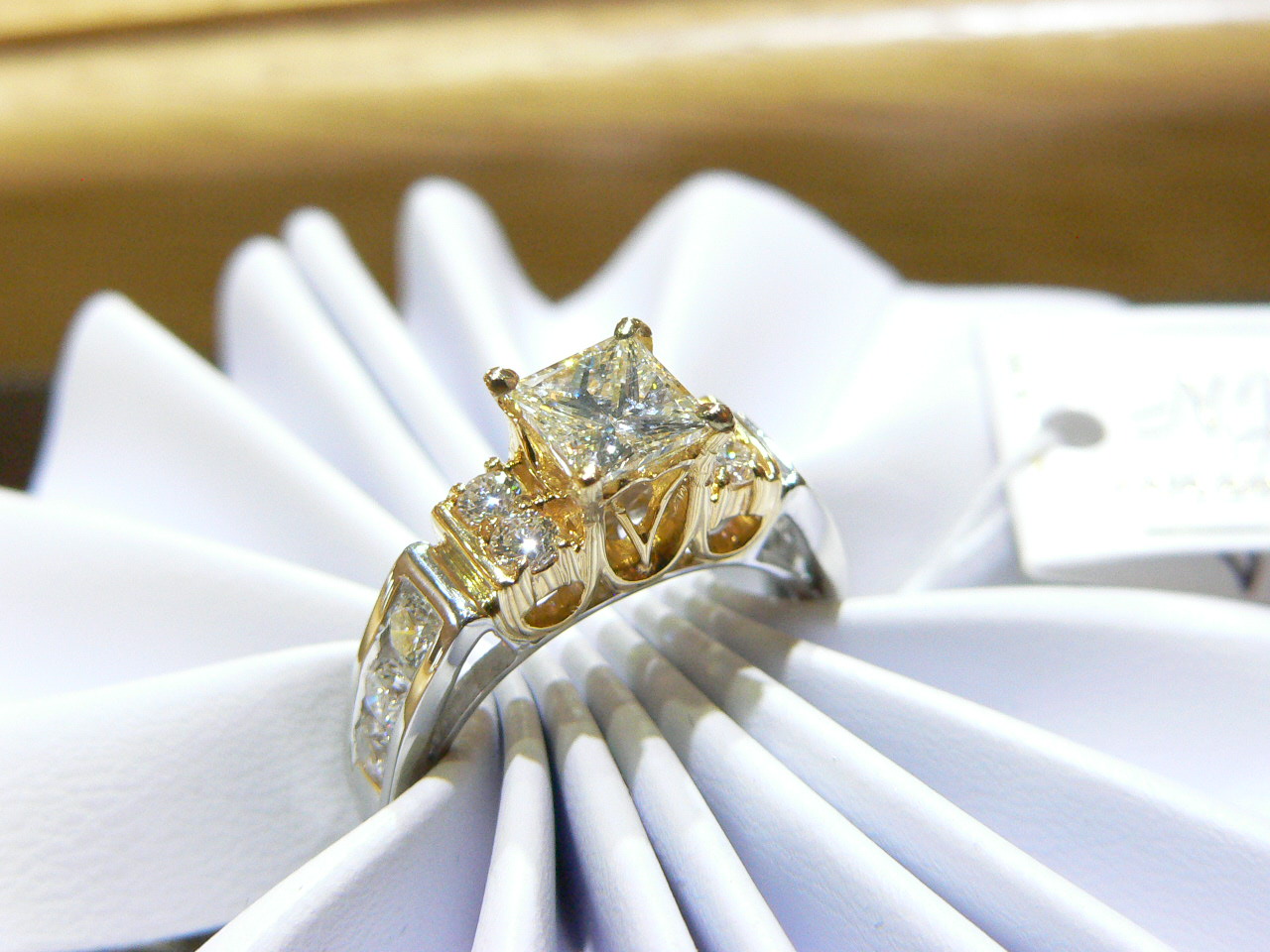
Platinum and 18K Yellow Gold Diamond Ring
A Two-Tone Platinum and 18K Yellow Gold Diamond Ring This diamond engagement ring combines platinum and 18-karat yellow gold for a distinctive two-tone design. It
Read MoreDiamond Information & Buying Guide | N.J. Diamonds
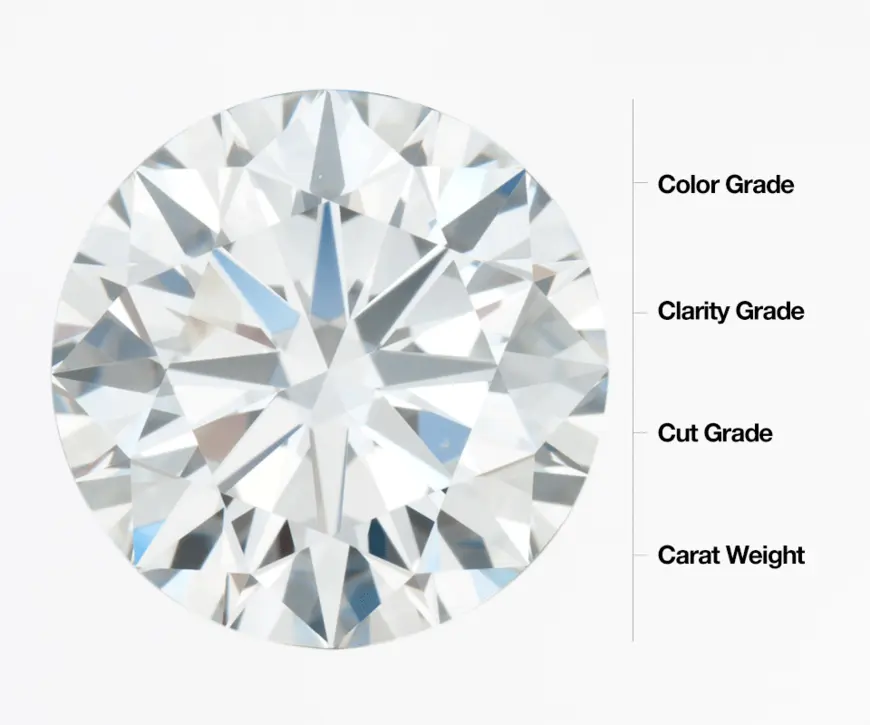
Learn how to compare diamonds with clear, practical guidance from N.J. Diamonds. This education hub covers the 4Cs, grading reports, natural and lab-grown diamonds, inclusions, treatments, engagement rings, and the questions to ask before buying.
Our family-owned Dearborn jewelry store has helped clients understand diamonds since 1996. Use these guides to prepare, then visit us to compare diamonds and grading documents in person.
Start With These Diamond Guides
- Diamond 4Cs Explained — Understand cut, color, clarity, and carat weight.
- Diamond Grading Reports — Learn what reports include and how to verify them.
- Diamond Buying Guide — Follow a practical process for choosing and comparing diamonds.
- Diamond Inclusions — Review common internal and external clarity characteristics.
- Custom Diamond Engagement Rings — Explore stone, setting, metal, and design decisions.

Understanding the Diamond 4Cs
The 4Cs are the standard framework for describing diamond quality, but no single grade tells the whole story.
- Cut influences brightness, fire, scintillation, and overall light performance.
- Color describes the relative absence of yellow or brown in diamonds on the D-to-Z scale.
- Clarity considers internal inclusions and external blemishes under controlled magnification.
- Carat weight measures weight rather than visible size.
Two diamonds with similar grades may still look different. Shape, proportions, transparency, fluorescence, setting style, and personal preference also affect the final appearance.
Natural and Lab-Grown Diamonds
Natural and laboratory-grown diamonds share the essential properties of diamond, but their origins, rarity, supply, pricing, disclosures, and report terminology differ.
Neither origin automatically determines beauty or quality. Confirm whether the diamond is natural or lab-grown, review the documentation issued for that exact stone, and compare appearance and price in the context of your priorities.
Diamond Grading Reports
An independent laboratory grading report can document a diamond’s origin and characteristics. Depending on the laboratory and report service, it may include measurements, weight, color, clarity, cut information, polish, symmetry, fluorescence, comments, treatments, and a unique report number.
A grading report is not an appraisal and does not establish retail replacement value. Verify the report through the issuing laboratory, match its information to the physical diamond, and have the stone inspected when appropriate.
Diamond Inclusions and Clarity
Inclusions are internal features, while blemishes appear at the surface. Many clarity characteristics are microscopic and have little effect on beauty without magnification. Their type, size, number, relief, and position all matter.
A higher clarity grade may be rarer, but it is not always visibly different once the diamond is mounted. Look for a clarity level that meets your visual expectations without ignoring structural or durability concerns.
Diamond Shapes and Appearance
Shape describes a diamond’s outline and cutting style. Popular options include round, oval, cushion, emerald, pear, marquise, princess, radiant, and Asscher shapes.
Each shape distributes weight and light differently. Compare face-up measurements, length-to-width ratio, bow-tie effects where relevant, corner protection, setting compatibility, and how the shape looks on the hand—not only the carat weight.
Diamond Treatments and Disclosures
Some diamonds are treated to change color or clarity. Examples may include fracture filling, laser drilling, high-pressure/high-temperature processing, coating, or irradiation. Treatments should be disclosed because they may affect value, care, repair procedures, and laboratory reporting.
Ask directly whether the diamond has received a treatment and confirm how the information appears on the grading report or sales documentation.
Choosing a Diamond for an Engagement Ring
The right diamond must work with the setting, metal, design, lifestyle, and budget. A low-profile ring, delicate band, halo, bezel, or four-prong solitaire may create different priorities for shape, measurements, durability, and visual balance.
Custom by Z can help you compare natural and lab-grown diamonds, choose a setting, and preview proportions through CAD before the ring is made. Learn more about custom jewelry design in Dearborn.
Diamond Buying Checklist
- Set a comfortable total budget for the diamond and setting.
- Choose shapes you enjoy before narrowing grades.
- Compare cut and visible light performance.
- Review color in the intended metal and setting style.
- Inspect clarity characteristics and consider durability.
- Compare measurements alongside carat weight.
- Confirm natural or laboratory-grown origin.
- Verify the grading report and treatment disclosures.
- View multiple diamonds under consistent lighting.
- Understand return, warranty, care, and trade-in policies.
Frequently Asked Questions
Which diamond quality factor should I prioritize?
Cut often has the strongest influence on sparkle, but the right balance depends on shape, setting, budget, and personal preference. Compare complete diamonds rather than shopping by one grade alone.
Is a bigger carat weight always better?
No. Carat measures weight, and a heavier diamond can appear smaller if its weight is hidden in depth. Compare face-up dimensions, proportions, cut, and appearance.
Do all diamonds need a grading report?
Individual reports are most common for significant center diamonds and loose stones. Very small accent diamonds are not always submitted individually. Ask what documentation accompanies the exact item.
Are lab-grown diamonds real diamonds?
Yes. They are diamonds produced in a laboratory rather than formed naturally in the earth. Their origin must be clearly disclosed, and their market behavior differs from natural diamonds.
Can I choose a diamond online and inspect it in person?
Ask us about the specific diamond and availability. We can help review its report and compare appropriate options before you make a final decision.
Compare Diamonds With N.J. Diamonds
Visit N.J. Diamonds at 5601 Schaefer Road in Dearborn, Michigan. Our team can help you understand the 4Cs, review grading reports, compare natural and lab-grown diamonds, and choose a stone for an engagement ring or custom design.
Learn first. Compare carefully. Choose with confidence. Contact N.J. Diamonds or visit our Dearborn jewelry store.
Diamond 4Cs Explained: Cut, Color, Clarity & Carat
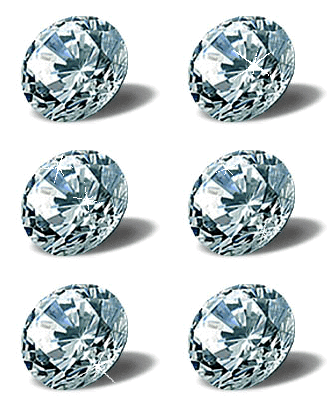
The 4Cs—cut, color, clarity, and carat weight—provide a consistent way to describe and compare diamond quality. Understanding how the four characteristics work together helps you look beyond a single grade and choose a diamond that fits your eye, setting, and budget.
N.J. Diamonds has helped clients compare diamonds in Dearborn since 1996. Our GIA education allows us to explain grading reports, show you differences in person, and focus on the qualities that matter most for your jewelry.
The 4Cs at a Glance
- Cut: How well a diamond’s proportions, symmetry, and polish work together to return light.
- Color: The relative absence of yellow or brown in diamonds graded on the D-to-Z scale.
- Clarity: The visibility, number, size, position, and nature of internal and external characteristics.
- Carat weight: The diamond’s weight, not a direct measurement of its visible size.
The 4Cs are not a formula that automatically identifies the “best” diamond. Two diamonds with similar grades can look different, and changing one characteristic may affect price more than appearance. A side-by-side comparison is often the most useful step.
1. Diamond Cut: Light, Brightness, and Sparkle
Cut describes how successfully a diamond’s angles, proportions, facets, symmetry, and polish interact with light. A well-cut diamond can appear bright, lively, and balanced. A poorly cut diamond may leak light and appear dull even if its color and clarity grades are high.
Cut is not the same as shape. Round, oval, pear, cushion, emerald, and marquise describe a diamond’s outline or cutting style. Cut quality describes how effectively the finished diamond performs.
What contributes to diamond appearance?
- Brightness: White light reflected from the diamond.
- Fire: White light separated into flashes of spectral color.
- Scintillation: Flashes of light and dark seen as the diamond, viewer, or light source moves.
- Polish: The quality of each facet’s surface.
- Symmetry: The precision and alignment of the facets.
Cut should be evaluated with the grading report and with your eyes. Lighting, diamond shape, setting style, and personal preference all influence how the finished jewelry appears.
2. Diamond Color: Understanding the D-to-Z Scale
For diamonds in the normal color range, color grading measures the relative absence of yellow or brown. The GIA scale begins at D, representing colorless, and continues through Z, where light yellow or brown is more noticeable.
- D–F: Colorless
- G–J: Near colorless
- K–M: Faint
- N–R: Very light
- S–Z: Light
Color differences can be subtle, especially between neighboring grades. Diamond shape, carat weight, metal color, setting design, fluorescence, and lighting can influence how color appears once the diamond is mounted.
Fancy-color diamonds—such as intense yellow, pink, blue, green, or other rare colors—are evaluated differently. Their value may increase with the strength and desirability of the color rather than with its absence.
3. Diamond Clarity: Inclusions and Blemishes
Clarity describes the relative absence of internal characteristics, called inclusions, and surface characteristics, called blemishes. These features can form during growth, cutting, setting, or wear. Many are microscopic and do not affect a diamond’s beauty to the unaided eye.
Clarity is graded under controlled conditions using 10× magnification. Graders consider the number, size, relief, nature, and position of the characteristics and how they affect the diamond’s overall appearance.
- FL: Flawless
- IF: Internally Flawless
- VVS1–VVS2: Very, Very Slightly Included
- VS1–VS2: Very Slightly Included
- SI1–SI2: Slightly Included
- I1–I3: Included
A higher clarity grade is not always visibly different once the diamond is set. The goal is often to find a diamond whose characteristics are acceptable to you and do not create durability concerns. Location matters: an inclusion near an edge or critical structural area may deserve more attention than a similar feature elsewhere.
4. Carat Weight: Weight Is Not the Same as Size
A carat is a unit of weight equal to 200 milligrams. Each carat is divided into 100 points, so a 0.75-carat diamond may also be described as a 75-point diamond.
Carat weight does not tell you exactly how large a diamond will look. Two diamonds with the same weight can have different face-up dimensions because of their shape, proportions, and depth. A well-proportioned diamond may appear larger or more balanced than a diamond that carries extra weight where it cannot be seen.
Price does not rise in a perfectly straight line with weight. Larger diamonds are rarer, and pricing can change at popular weight milestones. Comparing measurements, cut, and overall appearance—not only the carat number—can reveal better options.
How to Balance the 4Cs
The right balance depends on the diamond shape, jewelry design, metal, budget, and your priorities. A practical comparison may include:
- Prioritizing cut and visible light performance
- Choosing a color grade that looks right in the intended metal
- Selecting clarity based on visible appearance and durability, not rarity alone
- Comparing face-up measurements alongside carat weight
- Reviewing several diamonds side by side under consistent lighting
There is no universal combination that suits every buyer. Some people prefer a larger diamond with modest color or clarity; others prioritize a colorless appearance, a rare clarity grade, or exceptional cut.
Natural and Lab-Grown Diamonds
Both natural and lab-grown diamonds are diamonds, but they have different origins, supply dynamics, pricing, and disclosure requirements. The 4Cs remain useful for understanding appearance and quality, although laboratory reports and terminology can differ depending on the grading laboratory and report date.
Always confirm whether a diamond is natural or laboratory-grown and review the report that accompanies that specific stone. We offer both and explain the differences before you choose.
Diamond Grading Reports and Treatments
An independent grading report identifies the diamond and documents important characteristics. Match the report number, measurements, shape, and stated origin to the diamond being considered. A grading report is not the same as an appraisal and does not set a retail replacement value.
Some diamonds receive treatments intended to change color or clarity. Examples may include fracture filling, laser drilling, high-pressure/high-temperature processing, or irradiation. Treatments should be disclosed because they can affect value, care, repair procedures, and laboratory reporting.
Frequently Asked Questions
Which of the 4Cs is most important?
Cut often has the greatest influence on brightness and sparkle, but all four characteristics affect the diamond and its price. The best balance depends on what you value most.
Is diamond shape one of the 4Cs?
No. Shape describes the diamond’s outline, such as round, oval, cushion, pear, or emerald. Cut quality describes proportions and workmanship that influence light performance.
Does a higher carat weight always look larger?
No. Face-up size also depends on shape, proportions, depth, and measurements. Compare the dimensions listed on the grading report and view the diamond in person.
What does “eye-clean” mean?
“Eye-clean” is a trade description, not an official clarity grade. It generally means inclusions are not readily visible without magnification under stated viewing conditions. Ask how the seller is defining the term.
Should I buy a diamond based only on the grading report?
No. The report is essential for comparison, but it cannot fully communicate appearance and personal preference. Review the report and examine the diamond under consistent lighting.
Compare Diamonds in Dearborn
Visit N.J. Diamonds at 5601 Schaefer Road in Dearborn, Michigan. We can compare natural and lab-grown diamonds, review grading reports, and help you balance the 4Cs for an engagement ring or custom jewelry design.
Continue with our diamond buying guide, explore custom diamond engagement rings, or review more diamond and gemstone information.
See the differences. Understand the report. Choose with confidence. Contact N.J. Diamonds to compare diamonds in person.